

Lower Back Pain and Pelvic Pain During Pregnancy: What Your Body is trying to Tell you
Lower Back Pain and Pelvic Pain in Pregnancy: What your body is trying to tell you
No one warns you how physical motherhood actually is even for the woman who has prioritized her health, got it together, and was constantly active before pregnancy.
As a pelvic floor physical therapist helping active women navigate pelvic floor issues such as pelvic pain, painful intimacy, bladder leaks, and prolapse during pregnancy, postpartum, I hear this all the time from the women I help:
“I thought because I was active before pregnancy, I didn't think I would struggle with pain during pregnancy”.
But pregnancy changes your body in ways you may not expect—and lower back pain and pelvic pain during pregnancy are signals worth paying attention to.
This article will walk you through-
Why lower back and pelvic pain can happen during pregnancy—even if you were strong and active before pregnancy.
Why pregnancy-related pelvic and low back pain is more complex than simply blaming hormones or changes in posture.
How to prepare your body during pregnancy not just for birth, but for the physical demands of motherhood and postpartum recovery.
How pelvic floor physical therapy during pregnancy can help you build strength, capacity, and confidence while navigating pain during pregnancy.
Normal Changes due to Pregnancy
Pregnancy results in massive changes to your body
Spine
Hip muscles
Pelvic floor receives extra weight of the uterus and growing baby
Changes in your posture
For some women, your feet grow a size
Hormones
Weight gain
Why does Pelvic Girdle Pain or LOW back pain happen in pregnancy?
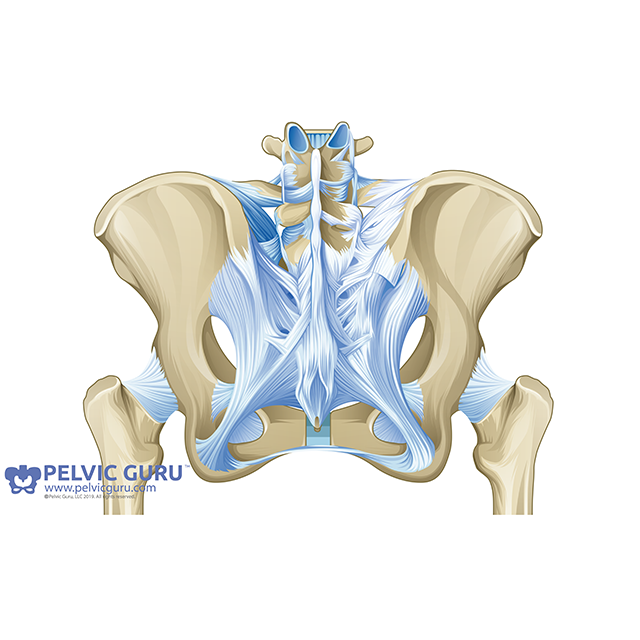
image of pelvic ligaments sturdy and stable, used with permission as a member of Pelvic Global
This study highlight how common pelvic pain is during pregnancy as 56- 72% of women experience back and pelvic pain during pregnancy.
This study defines pelvic girdle pain is as located in “the posterior iliac crest, the gluteals fold, and around the sacroiliac joints,” it can also refer down the posterior thigh and happens with or without pubic symphysis pain. Low back pain is defined as pain in the region of the lower ribs, into the gluteal fold, or radiating into the posterior thigh.
Please note, this article will use Low back pain and pelvic girdle pain interchangeably due to the overlapping presentation in the clinic.
Here’s what most people get wrong:
Blaming Hormones
It is important to know that hormone levels adapt during pregnancy and can influence flexibility, but hormones alone don't explain why one woman experiences significant pelvic pain and another doesn't.
While it is normal for hormone levels to adapt during pregnancy and influence flexibility, your pelvis is still quite stable, with many ligaments supporting it!
Blaming posture
Yes, posture will change, and this is necessary and normal as the belly needs to grow to adapt for a growing baby.
Lack of hope
If you have been told there is nothing you can do, please know this- pelvic pain during pregnancy is treatable and I want you to know I help women all the time with this in my practice.
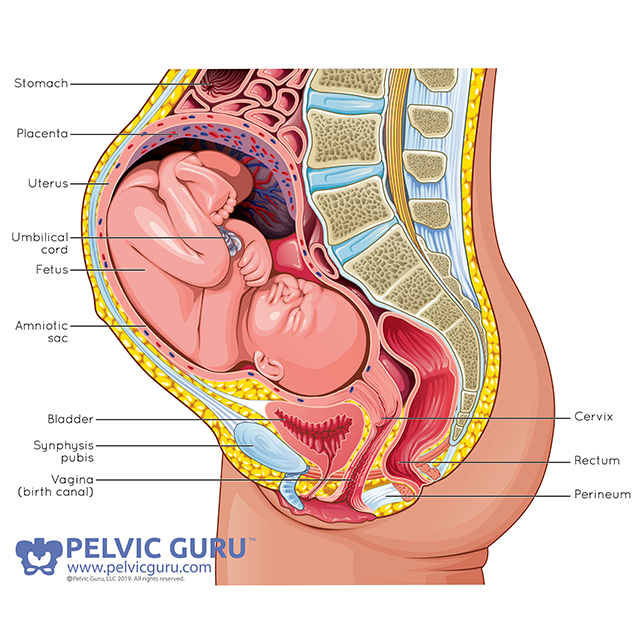
light skin pelvis and pelvic anatomy during pregnancy used with permission as a member of pelvic global.
Why does pelvic pain or low back pain happen during pregnancy
Risk Factors for Pelvic Girdle Pain during Pregnancy
Pregnancy-related pelvic girdle and low back pain is not just about what is happening in the body.
It is important to know that pain is complex and it is a combination of many factors such as
Stress
Emotions
Their environment
Orthopedic dysfunction such as:
past injuries or previous experiences of low back pain or pelvic pain
History of glute medius dysfunction
History of pelvic floor dysfunction
History of hypermobility
What someone is experiencing in everyday life

image of late stage Pregnancy dark skin, used with permission as a member of Pelvic Global
This means each pregnant woman's experience of low back pain or pelvic pain will be different.
Lower back pain during pregnancy may be a sign your body is asking for more capacity and is a signal worth paying attention to.
The great news is that this means there are several opportunities to help you improve your pain and enjoy your pregnancy and this is exactly what I help with as a pelvic floor physical therapist.
Being “Healthy” Before Pregnancy Doesn't Mean Your Body Doesn't Need to Adapt
Being strong before pregnancy is an advantage—but pregnancy changes the demands placed on your body, even for the woman who has prioritized her health, got it together, and was constantly active before pregnancy.
The truth is, your body is adjusting to a different demand during pregnancy.
We Underestimate How Much Preparation Is Necessary During Pregnancy
What most women underestimate is how much preparation is necessary during pregnancy– not just for the physical demands that are placed on your body, but for the emotional wellbeing and also strenuous recovery and care that is required for your baby to grow and for your own health not to be sacrificed all the while.
You're not only preparing for birth.
You're preparing for:
pregnancy
birth
recovery
carrying your baby
lifting
feeding
rocking
getting up and down
eventually chasing a toddler
and a body that will continue to change as you age.
So even if you don’t consider yourself an athlete— as a mother caring for babies day in and day out, your body will ask you to perform like one.
Motherhood requires -
❤️ Rocking babies to sleep.
❤️ Carrying kids (and somehow eventually their bike too).
❤️ Constant lifting of a heavy stroller, squatting to pick up toys, reaching, and getting up off the floor with trust in your body.
Truth be told, we underestimate how much our bodies are required to perform while still in the state of recovery
So How Is It That We Prepare for Birth, But Not Motherhood?
How is it that we approach triathlons and sports competitions, we go into it with intentionality knowing that our bodies will go through something tough,
But parenthood is not prepared the same way?
When most women think about preparing themselves physically, they are thinking about:
labor
pain management
and how to bounce back and getting back to business as usual
What you are not accounting for: The physical demands that come after birth.
Lower Back Pain During Pregnancy May Be Your Body Asking for More Capacity
This is why when I work with women during pregnancy pelvic physical therapy, I make sure they are equipped on all ends, starting with looking at–
Your movement patterns
Your posture
Your breathing
Muscle function of your hips, pelvic floor, and abs
Your beliefs about your abilities and goals
We put all of this together with your current daily load and recovery practices, and this looks like you getting-
A custom plan for getting to the root and finding relief of your pregnancy-related pain
Clarity on your comfort measures and pain management during labor
A pathway on how to effectively recover afterwards, whether you have a vaginal or C-section birth.
Treatment for Pelvic Pain during Pregnancy
This Is Why I Recommend “Training” During Pregnancy
This is why as silly as it may sound for some, training for motherhood is what I recommend for my clients.
And by training I don’t mean hitting the gym, 10x a week, testing your VO2 max,
But I mean making sure your body can move, lift, and is equipped to handle the stress it is about to conquer with lack of sleep and the emotional demands of caring for a new baby.
If the idea of “training” for parenthood feels like another thing on your to-do list,
This isn’t about adding shoulds or telling you need more discipline —
It’s about recognizing what your body is already doing & being intentional to give it what it needs now and in the season to come. Treatment can often look like—
Curated exercise program to support areas of weakness
Guidance to feel ease around tight and achy muscles
Lifestyle management strategies to improve sleep, reduce fatigue, and improve energy levels
Manual therapy to support pain reduction
Self-management strategies and exercises to promote your autonomy in symptom improvement and resiliency.
The challenge is when most women think about preparing themselves physically–
they are thinking about labor
pain management
and how to bounce back.
What you are not accounting for the small ways you care for yourself in pregnancy is not just about preparing for labor, it’s creating the habits of caring for yourself, while at the same time
Needing to get on your hands and knees and get up quickly with crawler
Chase after a toddler
Crouching awkwardly over a tub to bathe your kid regularly…or semi- regularly (no judgement)
Carry your kid and their bike home from the park
These are the aspects of parenthood that require you to be at your physical peak and where strength training during pregnancy is an integral part of the programs at Radiance PT. Labor is just the start.
What If We Stopped Normalizing Pelvic Pain During Pregnancy?
Here is the kicker, 37%- 70% women have back pain a year postpartum, and we have almost normalized pain in pregnancy and in the parenthood process, but what if it didn't have to be that way?
It’s important to know that while some discomfort is part of pregnancy— Persistent, limiting, or worsening pain deserves attention and doesn’t have to be your truth.
Your Body Is the Greatest Asset You Can Invest In
With intentional movement, building capacity- your body is the greatest asset you can invest into in the process of raising healthy kids
This is why resilience as a new mother is not just your body bouncing back; it is how well equipped you are to take care of yourself during one of the most physically exhausting periods of your life.
Pregnancy and child rearing are the gifts to set your body up for decades to come—
learning to listen to the signals your body is telling you through pain, leakage, fatigue, and not accepting them as “things to live with because you are a mother”
practicing how to adjust, recover, and build capacity for your body to perform as it should day in and out without pain, exhaustion, or not being able to keep up with your children.
What I Hear From Women in My Clinic as a Pelvic Floor PT
I hear this all the time in my clinic as a pelvic floor PT-
moms who want to be stronger for their next pregnancy while caring for a toddler without back pain
women who had no idea that their birth injury was going to slow down their return to fitness
And if you can relate to this at all, I get it.
Most women aren’t taught to approach pregnancy in this different way—
The focus is labor & hospital bags, which are important, but the truth is pregnancy is a season where you can begin building the habits to serve you in motherhood.
Here’s the thing,
The goal is not to prevent your body from changing — that’s impossible.
The goal is to know how to navigate and maximize those changes through building healthy, resilient habits that keep your body functioning at its best, even amidst ongoing physical stressors, as that is the reality of what parenthood demands from you.
You Don't Have to Accept Pelvic Pain or Lower Back Pain as “Just Part of Pregnancy”
And guess what-
Just because you are now a mother and you have given birth, it's not a reason to succumb to constant pain, fatigue, leakage and the inability to enjoy movement
As especially now as a mother, it is your duty to that you are physically primed to keep up with the ever-evolving demands motherhood has of you.
How a Pelvic Floor PT Can Help With Pelvic Pain or Lower Back Pain During Pregnancy
During pregnancy pelvic physical therapy, as as pelvic floor physical therapist, I assess more than your pelvic floor.
The session starts with your history, your goals, as well as an assessment of–
Your movement patterns
Breathing
Muscle function: hips, abs, and pelvic floor
Daily movement or sports demands like squat or running assessment
Your daily habits around recovery
A key piece of the work we do together is to help you build the awareness & capacity so you can move through them with confidence in your changing body.
This is why when I work with women in pregnancy, we ensure women are fully equipped so that women know how to navigate their changing bodies with ease, not feel like they are dragging themselves through the day, and get back to the sports they love with trust in their bodies.
Prepare for the Mother You Are Becoming
No one warns you how physical motherhood actually is.
But pregnancy gives you an opportunity.
Not to prevent your body from changing.
Not to “bounce back.”
Not to become an elite athlete.
But to:
Build awareness.Build capacity.Build resilience.
We need to start approaching birth and motherhood with more intentionality—and with the long term in mind.
Not just preparing for what your body will go through during birth, but understanding what it will take for your body to reach a full recovery and support you through the physical demands of motherhood.
So that you can move through pregnancy, birth, and motherhood with confidence in your changing body—and not feel like you're dragging yourself through the day or that your health is an afterthought on the bottom of your to-do list.
Are you located in the Durham, Raleigh, Chapel Hill area and are looking for sports-minded pelvic floor PT during pregnancy?
If you are an active mom who wants personalized guidance during pregnancy—not just another generic checklist from the interwebs—the Empowered Pregnant Athlete Program was created for you.
We start by looking at what is happening in your body now, so you can stay active without fear or misinformation slowing you down.
I help guide you to a deeper understanding of your pelvic floor, so you can find more ease when things hurt the most during labor.
We create a plan that supports the active lifestyle you want when your baby is born.
You deserve to have support before pain or symptoms start disrupting the life you want to live as an active mom, I would love to support you.
Next on your reading list
1. What you need to know about Diastasis Recti in pregnancy
2. When to start pelvic PT in pregnancy
References:
Miladi S, et al. Prevalence and associated factors for persistent low back pain in the postpartum period. Tunis Med. 2023 Aug-Sep;101(8-9):688-692. French. PMID: 38445403; PMCID: PMC12558049. https://pmc.ncbi.nlm.nih.gov/articles/PMC12558049/
Engeset J et al. Pelvic girdle pain affects the whole life--a qualitative interview study in Norway on women's experiences with pelvic girdle pain after delivery. BMC Res Notes. 2014 Oct 3;7:686. doi: 10.1186/1756-0500-7-686. PMID: 25277975; PMCID: PMC4196110.https://pmc.ncbi.nlm.nih.gov/articles/PMC4196110/
Alqabbani S, et al. Low Back Pain and Disabilities Among Postpartum Women: Prevalence, Severity and Associated Factors. Healthcare (Basel). 2026 Apr 6;14(7):959. doi: 10.3390/healthcare14070959. PMID: 41975961; PMCID: PMC13072935.https://pmc.ncbi.nlm.nih.gov/articles/PMC13072935/
Pulsifer J, et al. Reframing beliefs and instilling facts for contemporary management of pregnancy-related pelvic girdle pain. British Journal of Sports Medicine 2022;56:1262-1265. https://bjsm.bmj.com/content/56/22/1262
Starzec-Proserpio, M. et al. Prevalence and factors associated with postpartum pelvic girdle pain among women in Poland: a prospective, observational study. BMC Musculoskelet Disord23, 928 (2022). https://doi.org/10.1186/s12891-022-05864-y. https://link.springer.com/article/10.1186/s12891-022-05864-y
Vøllestad, N et al. Association between the serum levels of relaxin and responses to the active straight leg raise test in pregnancy,Manual Therapy,Volume 17, Issue 3, 2012, https://doi.org/10.1016/j.math.2012.01.003. https://www.sciencedirect.com/science/article/abs/pii/S1356689X12000045?via%3Dihub